
Returning browser recognition
Connect observed visits using browser characteristics and available identifiers, including supported situations where cookies have been cleared.
Transaction Risk Score
Connect browser, network, email, phone and payment-history signals in one assessment. See what deserves attention, why it matters and what to review next.
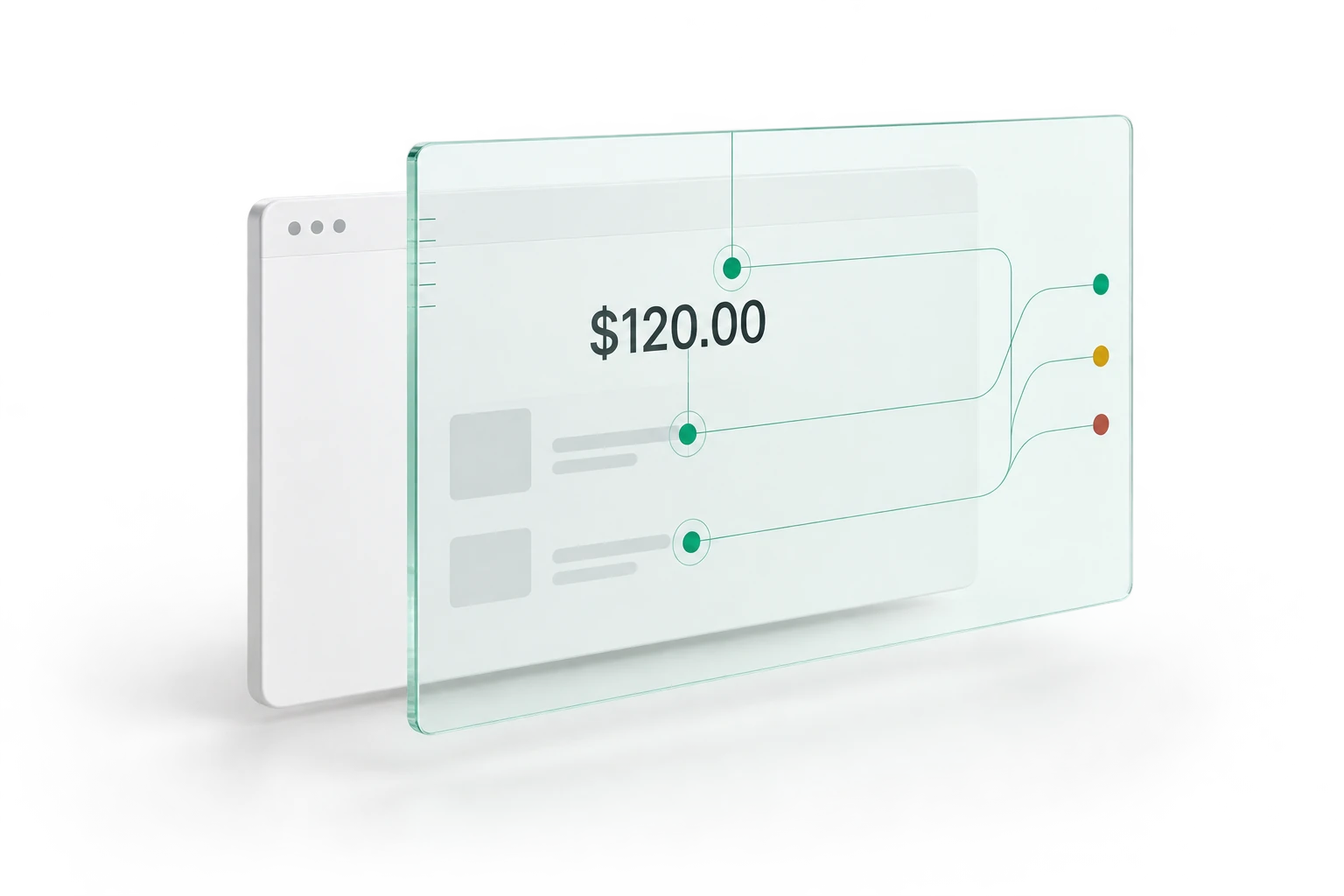
Read the signals together
A familiar browser, a changed payment pattern or several concerning signals can lead to different review decisions. Explore how the context changes across three payment profiles.
The score summarizes the assessment. The signals explain what needs attention, and your payment policy determines the action.
Elevated risk
Several concerning signals appear together. Inspect the payment and supporting records before taking the next step.
Elevated risk. Risk score 72 out of 100. Review before proceeding.
The context behind the score
A useful assessment combines what is known about the session, the connection, the contact details and the transaction itself.
Connect a returning browser with relevant history and look for signs that a session is automated, altered or unusually active.
Connect observed visits using browser characteristics and available identifiers, including supported situations where cookies have been cleared.
Add context when private mode or privacy-focused settings limit the information a browser shares.
Distinguish suspected scripted activity from ordinary sessions, with context for recognized bots and agents.
Flag altered browser characteristics, anti-detect software and other inconsistencies that may indicate evasion.
Consider virtual-machine indicators, uncommon configurations and debugging signals in the context of the payment.
Look for bursts of observed events, frequent connection changes or multiple linked accounts using the same browser.
Available signals depend on the payment channel, connected data and enabled services. A missing result remains unknown; it is not treated as proof that a payment is safe.
Continuity across visits
Browser recognition can connect relevant activity across supported changes in cookies, private browsing or network conditions. That continuity helps your team see a payment in the context of earlier interactions.
Review whether the browser has appeared before and how its current activity relates to previous visits.
Consider the strength of the browser match separately from the transaction's risk level.
A browser match does not prove who is using it. Shared devices, different browsers and changing settings can affect recognition.
Earlier visit
Browser observedCurrent visit
Connection changedReview match confidence alongside the payment context.
From payment context to case context
Relevant browser, connection and account records can help connect a challenged payment with prior activity. Bring available digital context together with purchase records for individual case review.
Link available session identifiers, timestamps, IP context and account references to the transaction they describe.
Compare relevant previous payments alongside customer agreements, service or delivery records and correspondence.
Our team evaluates the dispute reason and whether the records can support the response or an eligible evidence-based deflection.
Visa Compelling Evidence 3.0 and Mastercard First-Party Trust have specific requirements for transactions, matching data and submission. A browser identifier or risk score alone does not qualify a case or guarantee a favorable outcome.
Built around the payment flow
A connected checkout can link the customer's browser event to the payment. Merely sending a payment link does not create a browser record.
Explore payment linksUse the contact information and transaction history available to the flow. The staff member's workstation does not identify the caller's device.
Explore IVR paymentsSupported native-app integrations can add checks for rooted or jailbroken devices, emulators, simulators and app tampering. Coverage depends on the operating system and integration.
Discuss an integrationDiscuss your payment channels, the signals that matter to your business and a review approach your team can use.
Available configurations, eligibility and service terms are confirmed in your proposal.